The Best Aperitivo in Italy Is in Venice
Several essential components of the tradition are unique to the city.
The Italian tradition of aperitivo, a social pre-dinner happy hour of sorts consisting of low-alcohol drinks and light snacks, has been getting an increasingly higher profile stateside over the past few years.
Americans love the notion of having a socially acceptable way of getting a light buzz on during the late-afternoon hours. In Italy, however, the tradition focuses more on the gathering of friends than on the drinking aspect; it’s an essential form of social connection.
The aperitivo tradition is said to have originated in Turin a couple hundred years ago, and it has since spread throughout Italy (and beyond; in France it’s known as apero), but nowhere has adopted aperitivo and made the tradition its own quite like Venice.
These are the reasons why.
A is for Aperol
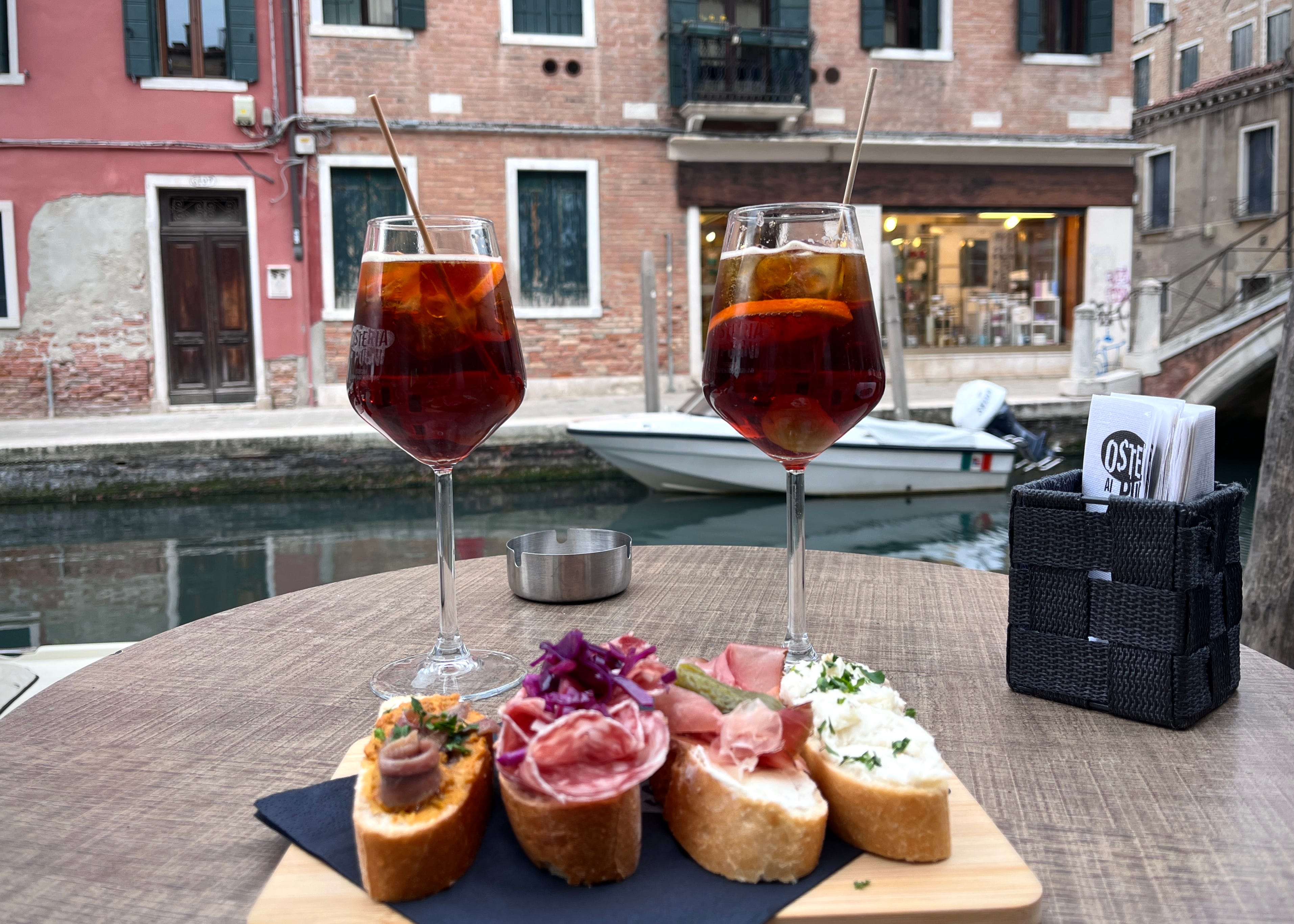
Spritzes are the quintessential aperitivo drink and the one most popularly associated with the tradition: They’re low-alcohol and easy-drinking, a way to take the edge off without going overboard.
The spritz originated in the Veneto region (that is, the region of Italy including and surrounding Venice), since its essential components did as well.
Venice is among the nine Italian provinces, all in northeast Italy, that produce prosecco (the sparkling wine that’s a key component in a spritz). Aperol was created in Padua (in the Veneto, about 25 miles from Venice) in 1919, while Select, a similar aperitivo liqueur created in Venice, followed immediately after in 1920.
Aperol spritzes are the version of the drink that nearly everyone stateside knows, but to order one in Venice is the mark of a tourist; locals order Select or Cynar (a more bitter liqueur, also from Padua) spritzes exclusively.
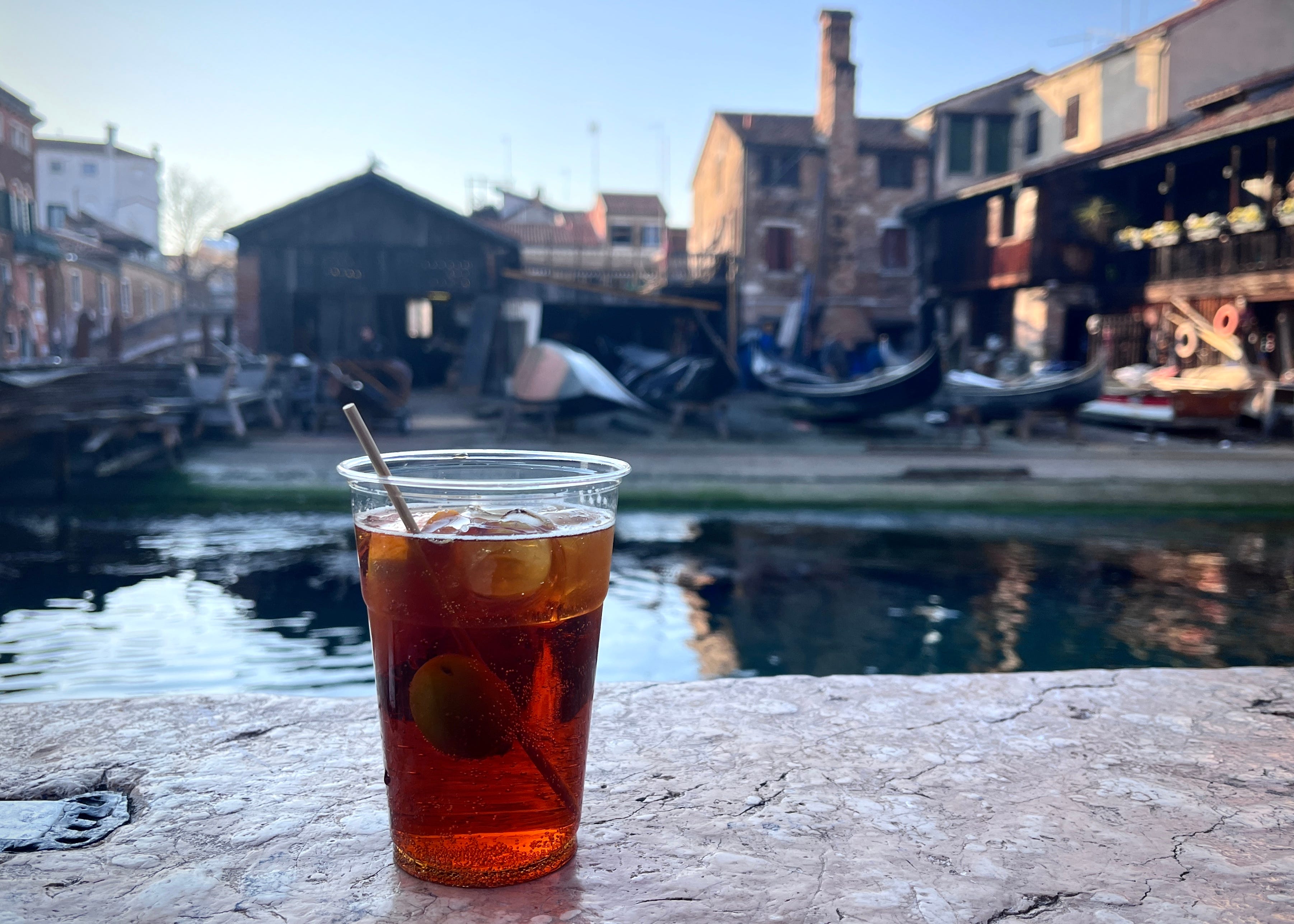
A spritz in Venice should cost between 3 and 5 euros at a bacaro (see below) in Cannaregio or the Dorsoduro; any more than that and you’re likely at a tourist trap. It’s often served in plastic cups (especially when it’s likely to be consumed outdoors), and should be garnished with an olive or a lemon or orange wheel, or both.
B is for Bacari
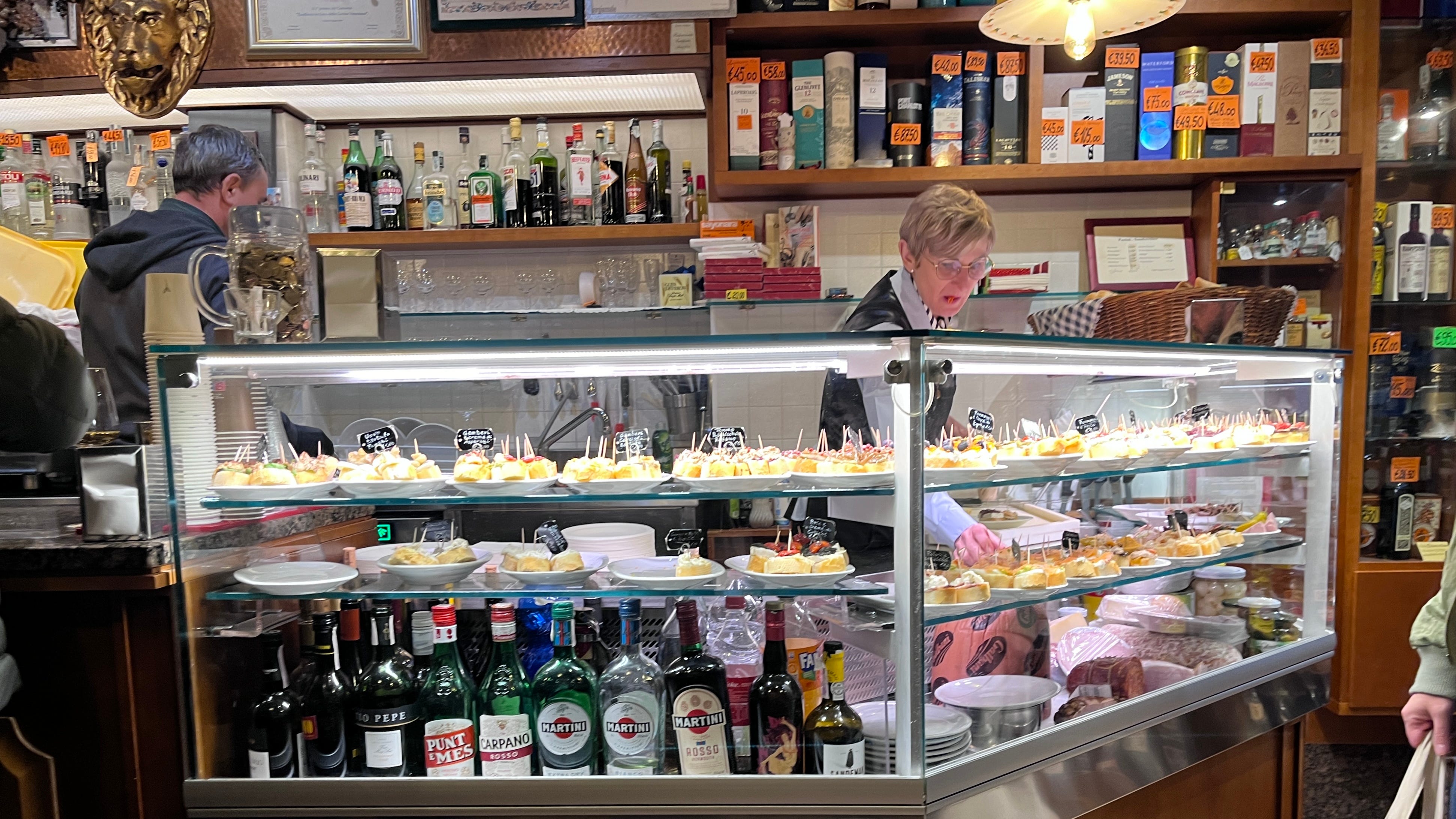
Bacari are cozy, rustic bars unique to Venice that serve wine and spritzes and cicchetti (more on that in a moment).
They’re typically open all day, from morning until mid-evening or later, and are extremely casual and no-frills, in a charming way. You stand in line to order from a counter, selecting snacks from a display case; it can feel a bit like ordering at a deli.
They’re also tiny, with few seats, which means they tend to get crowded with people standing, and guests spill out onto the streets in front.
The typical aperitivo experience involves a bacaro tour, stopping by several over the course of an evening and having a drink and a few bites at each.
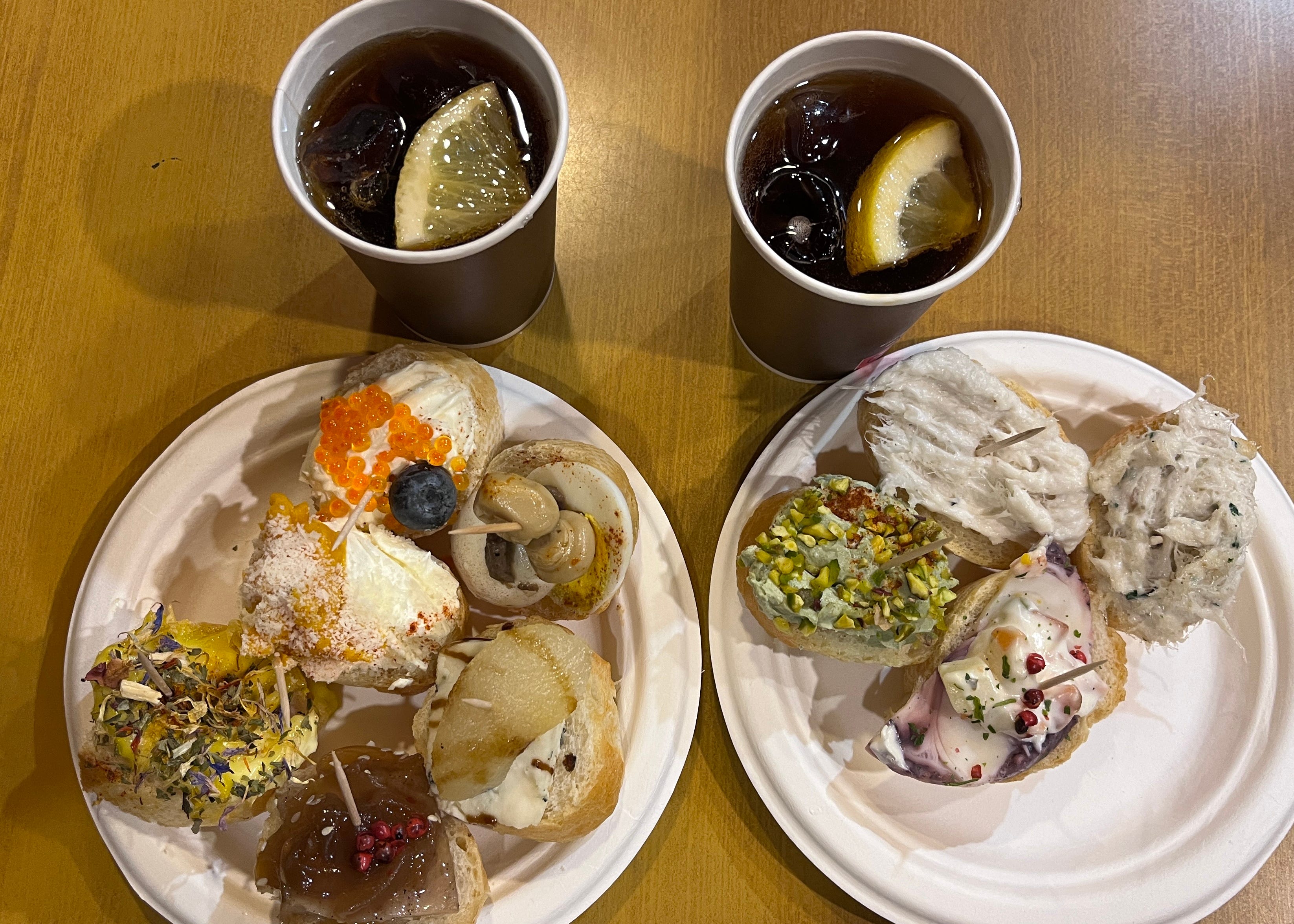
C is for Cicchetti
It seems that Italians believe one should never drink without also having food. Nearly everywhere in the country, ordering a drink will also get you small bowls of olives, nuts, cheese, etc, called stuzzichini. The best snacks to nibble on as you sip, however, are a unique type found only in Venice.
Cicchetti, priced between 1 and 3 euros apiece, generally take the form of crostini topped with an array of delicious things, often seafood-focused to reflect the city’s seaside location. Baccalà montecato, or whipped salt cod, is ubiquitous and a must-try. Other cicchetti toppings I’ve encountered involve squid, fried or cured fish, shrimp, and any number of other delicious things. You might also see fried arancini-like balls, often colored black with squid ink.
They’re an optional component of the aperitivo experience, but an important one. Not least because bacari are the only places I encountered in Italy that don’t typically serve stuzzichini with drinks, and also because in Italy dinner is usually taken late, around 9 or 10 pm, so it helps to have something to tide you over until then.
Cobble enough cicchetti together, and you can easily make a light dinner out of them if you like; two to four will likely tide you over until dinner, while eight or more (ideally from several different bacari), could sufficiently form a makeshift dinner in themselves.
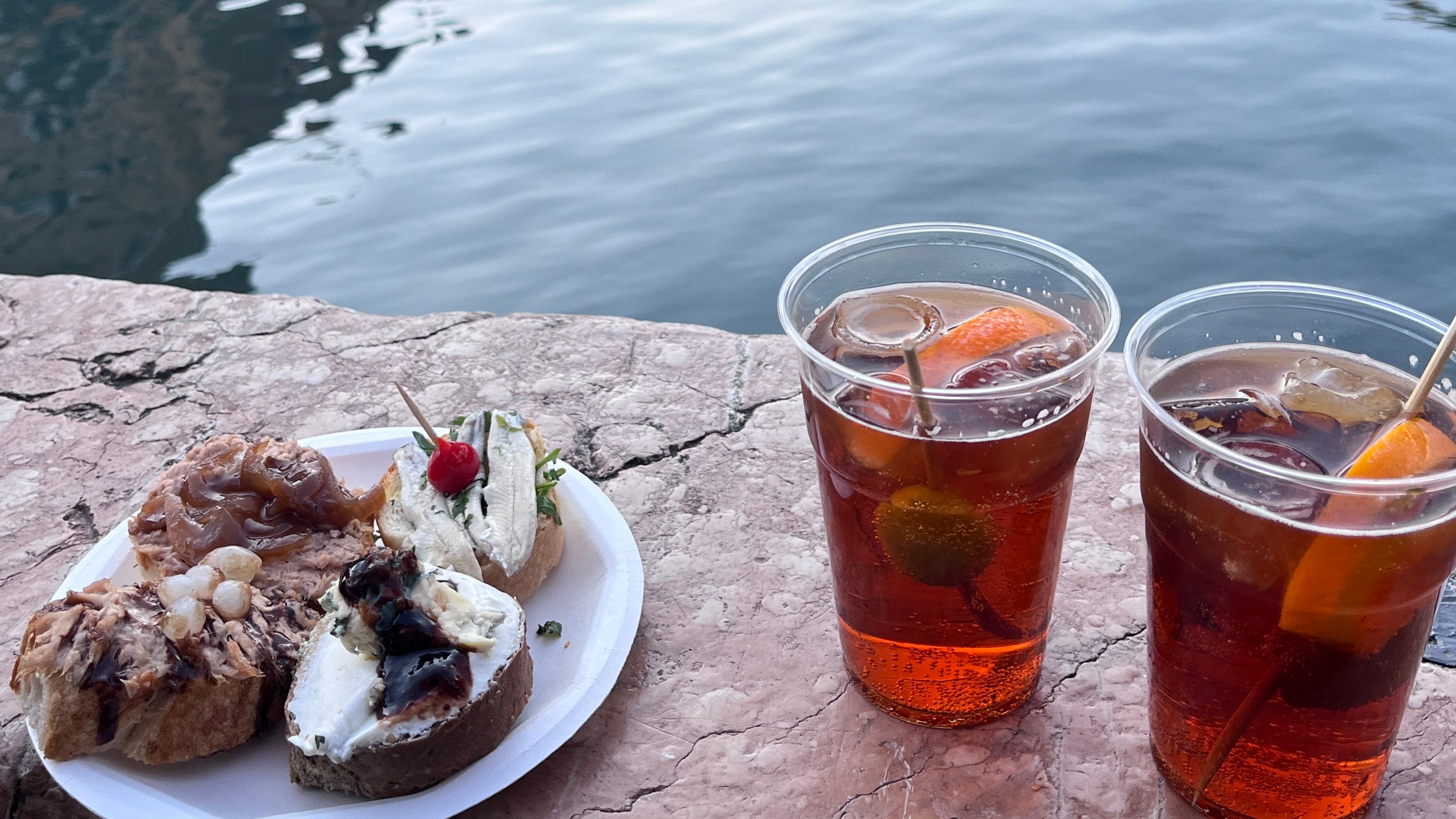
C is also for Canals
Elsewhere in Italy, aperitivo hour is most often taken at a table on the edge of a piazza or indoors in a café of varying levels of glamour. There’s nothing wrong with that; it can be a lovely experience. But Venice’s famed canals enhance the tradition to an incredible degree.
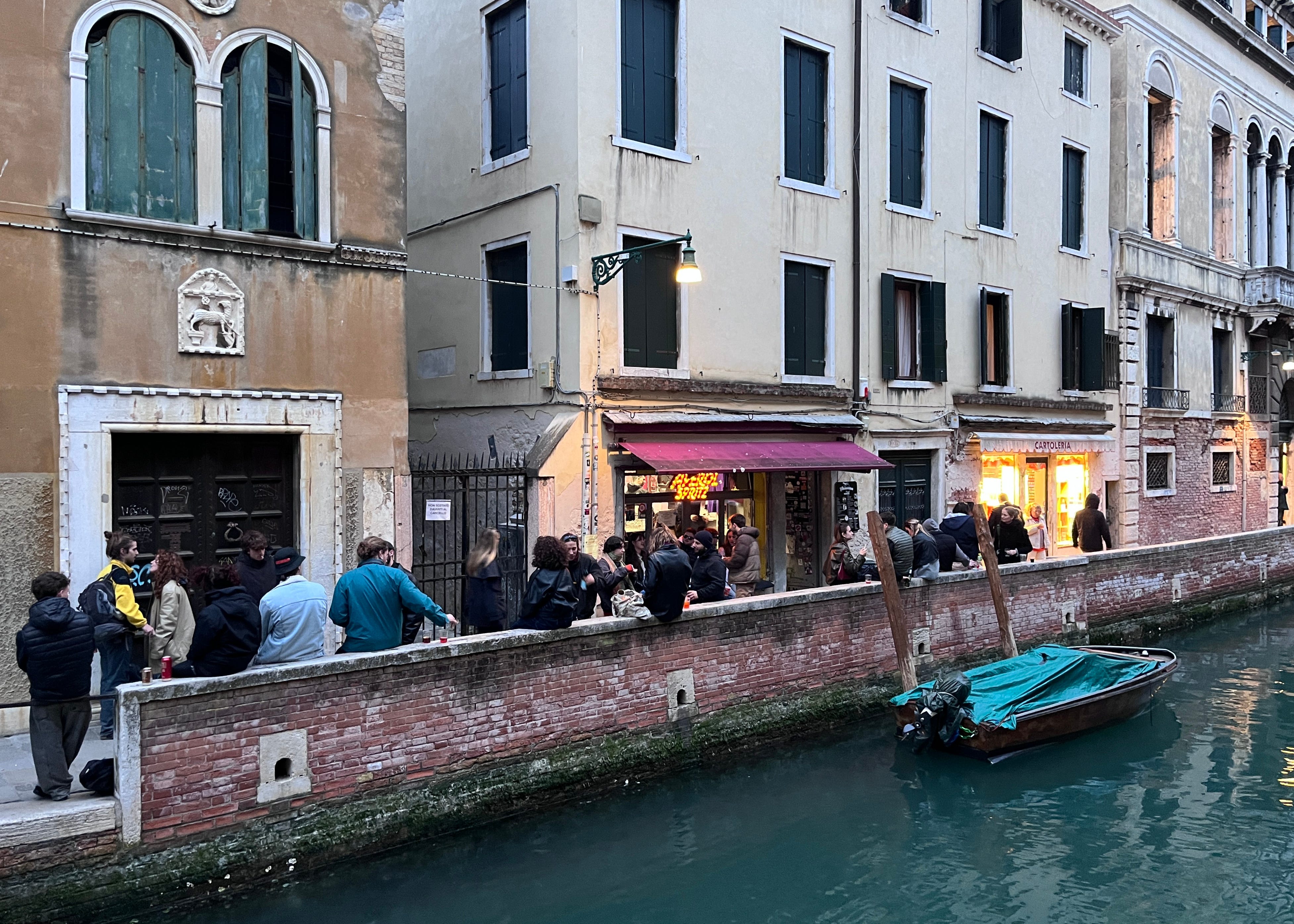
Since the bacaro are generally tiny and crowded, patrons spill out onto the streets in front with their drinks and cicchetti. Sometimes the bacaro has a handful of tables out front; sometimes there’s a ledge lining the outer wall; my favorite bacari, however, are located alongside canals, where people perch atop the low brick or stone walls as they eat and drink and chat.
In Venice, canals function as streets; they’re where life is lived. It’s as likely you’ll see an emergency boat speed past, lights flashing, as you will a gondola leisurely making its way by. Choose the right bacaro, and you might find yourself sitting across the canal from a gondola boatyard, watching workers repair and paint the quintessential Venetian crafts.
Combine it with the crowds of locals (my favorites bacari are near Venice’s main university, and cicchetti obviously form a favorite cheap meal for students and faculty alike), and the tradition provides a way to participate in real actual Venetian life in a city overrun with tourists.